
Dental Emergencies
Dental emergencies are seen the same day. Call us immediately at (623) 556-5510.
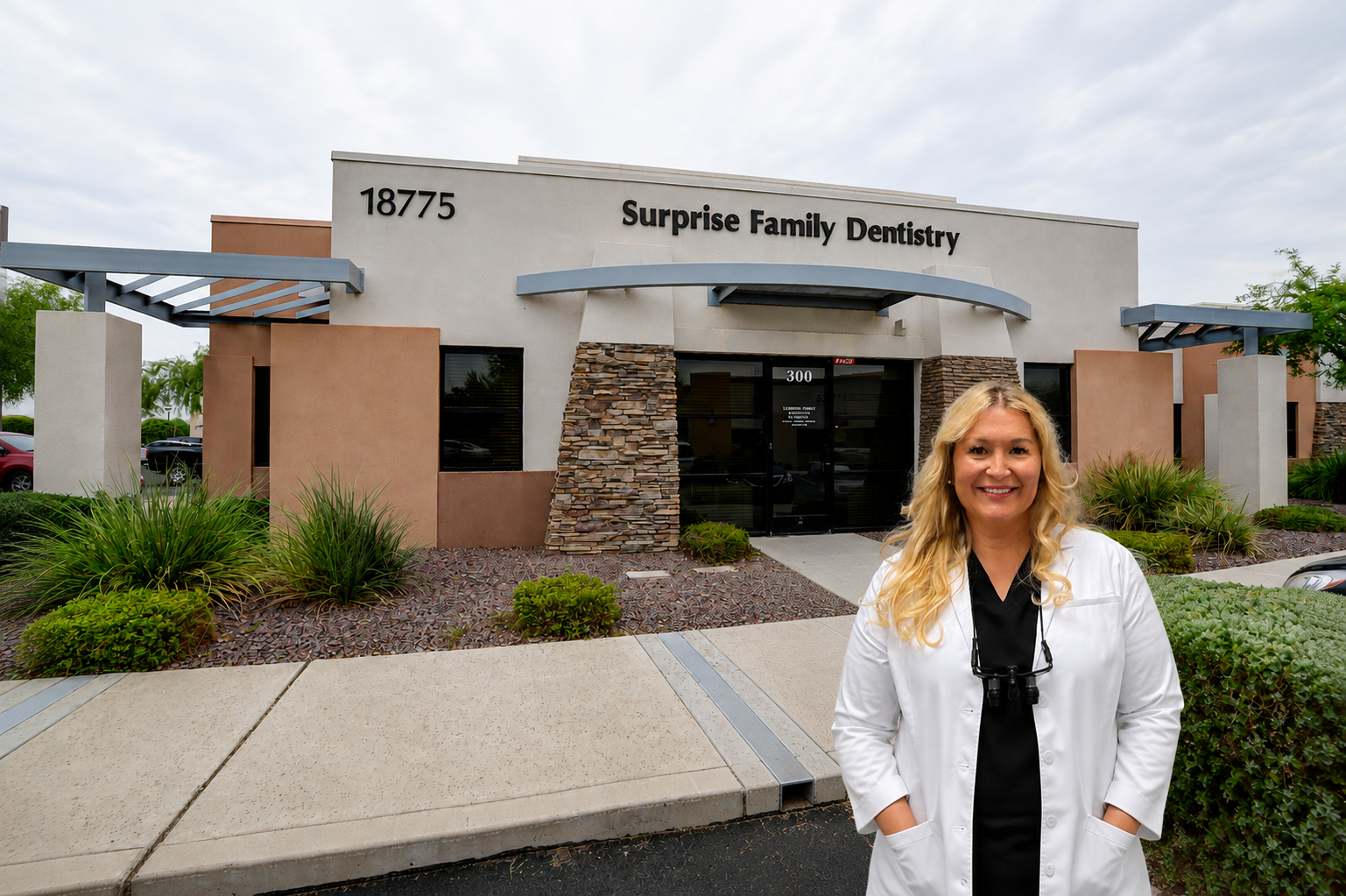
Prompt Care When You Need It Most
Dental emergencies are quite frightening and often painful. Prompt treatment is almost always required to alleviate pain and to ensure the teeth have the best possible chance of survival.
Sometimes, teeth become fractured by trauma, grinding, or biting on hard objects. In other cases, fillings, crowns, and other restorative devices can be damaged or fall out of the mouth completely. If there is severe pain, it is essential to contact our office immediately. The pain caused by dental emergencies almost always gets worse without treatment, and dental issues can seriously jeopardize physical health.
Types of Dental Emergencies
Know what to do before you reach us. Here's how to handle the most common dental emergencies.
Avulsed Tooth (Tooth Knocked Out)
If a tooth has been knocked clean out of the mouth, it is essential to see a dentist immediately. When a tooth exits the mouth, tissues, nerves, and blood vessels become damaged. If the tooth can be placed back into its socket within an hour, there is a chance the tissues will grow to support the tooth once again.
Steps to take:
- Call our office immediately.
- Pick up the tooth by the crown and rinse it under warm water. DO NOT touch the root.
- If possible, place it back into its socket — if not, tuck it into the cheek pouch.
- If the tooth cannot be placed in the mouth, put it into a cup of milk, saliva, or water as a last resort. Keep the tooth from drying out.
- Get to our office quickly and safely.
At our office: We will try to replace the tooth in its natural socket. In some cases, the tooth will reattach, but if the inner mechanisms of the teeth are seriously damaged, root canal therapy might be necessary.
Lost Filling or Crown
Usually, a crown or filling comes loose while eating. Once it is out of the mouth, the affected tooth may be incredibly sensitive to temperature changes and pressure. Crowns generally become loose because the tooth beneath is decaying — the decay causes shape changes in the teeth, meaning the crown no longer fits.
Steps to take:
- Make a dental appointment as soon as possible and keep the crown in a cool, safe place.
- Apply clove oil to the tooth to alleviate pain.
- Clean the crown and affix it onto the tooth with dental cement, available at a local pharmacy.
- If the crown is lost, smear the top of the tooth with dental cement to alleviate discomfort.
- DO NOT use any kind of glue to affix the crown.
At our office: We will check the crown to see if it still fits. If it does, it will be reattached to the tooth. Where decay is noted, this will be treated and a new crown will be made.
Cracked or Broken Teeth
The teeth are strong, but they are still prone to fractures, cracks, and breaks. Sometimes fractures are fairly painless, but if the crack extends down into the root, the pain will likely be extreme. Fractures, cracks, and breaks are generally caused by trauma, grinding, and biting.
Steps to take:
- Call our office immediately.
- Rinse the tooth fragment and the mouth with lukewarm water.
- Apply gauze to the area for ten minutes if there is bleeding.
- Place a cold, damp cloth on the cheek to minimize swelling and pain.
- Cover the affected area with over-the-counter dental cement if you cannot see us immediately.
- Take a topical pain reliever.
At our office: If a fracture or crack extends into the root, root canal therapy is often the most effective way to retain the tooth. In the case of a complete break, your dentist will usually affix the fragment back onto the tooth as a temporary measure.
Dislodged or Loose Teeth
When a tooth has been dislodged or loosened from its socket by trauma or decay, it might be possible to save it. If the tooth remains in the mouth still attached to the blood vessels and nerves, there is a good chance root canal therapy will not be necessary.
Steps to take:
- Call our office immediately to make an appointment.
- Use a cold compress and over-the-counter medications to relieve pain in the meantime.
At our office: Your dentist will reposition the tooth and add splints to stabilize it. If the tooth fails to heal, root canal therapy might be required.
Experiencing a Dental Emergency?
Don't wait — call us right away. We see dental emergencies the same day and are here to help relieve your pain and protect your smile.